How to Set Up a GmbH in Switzerland: Step-by-Step Guide
The GmbH is Switzerland's most popular company form for small businesses. Here is how to set one up: share capital, notary, commercial register, costs and timing.

If you want to start a company in Switzerland with limited liability and a modest amount of capital, the GmbH (Gesellschaft mit beschränkter Haftung) is usually the first choice. In French it is a Sàrl, in Italian a Sagl, and in English it is often called a Swiss LLC. According to the federal KMU portal for small businesses, there are around 130,000 GmbHs in the country.
This guide walks through what a GmbH is, what you need before you start, and each step to get it into the commercial register.
What is a GmbH?
A GmbH is a company with its own legal personality. It can sign contracts, own property and be sued in its own name. Its key features are:
- Minimum share capital of CHF 20,000, which must be fully paid in when the company is founded, in cash or as contributions in kind.
- Limited liability: the company is liable for its debts with its own assets. Shareholders normally risk only the capital they have put in, unless the articles of association add extra payment obligations.
- One founder is enough. A GmbH can be set up by one or more people or companies.
- Shareholders are listed publicly in the commercial register, unlike shareholders in an AG.
Since the 2023 company law reform, the share capital can also be held in a major foreign currency used in the business: EUR, USD, GBP or JPY. Bookkeeping must then use the same currency.
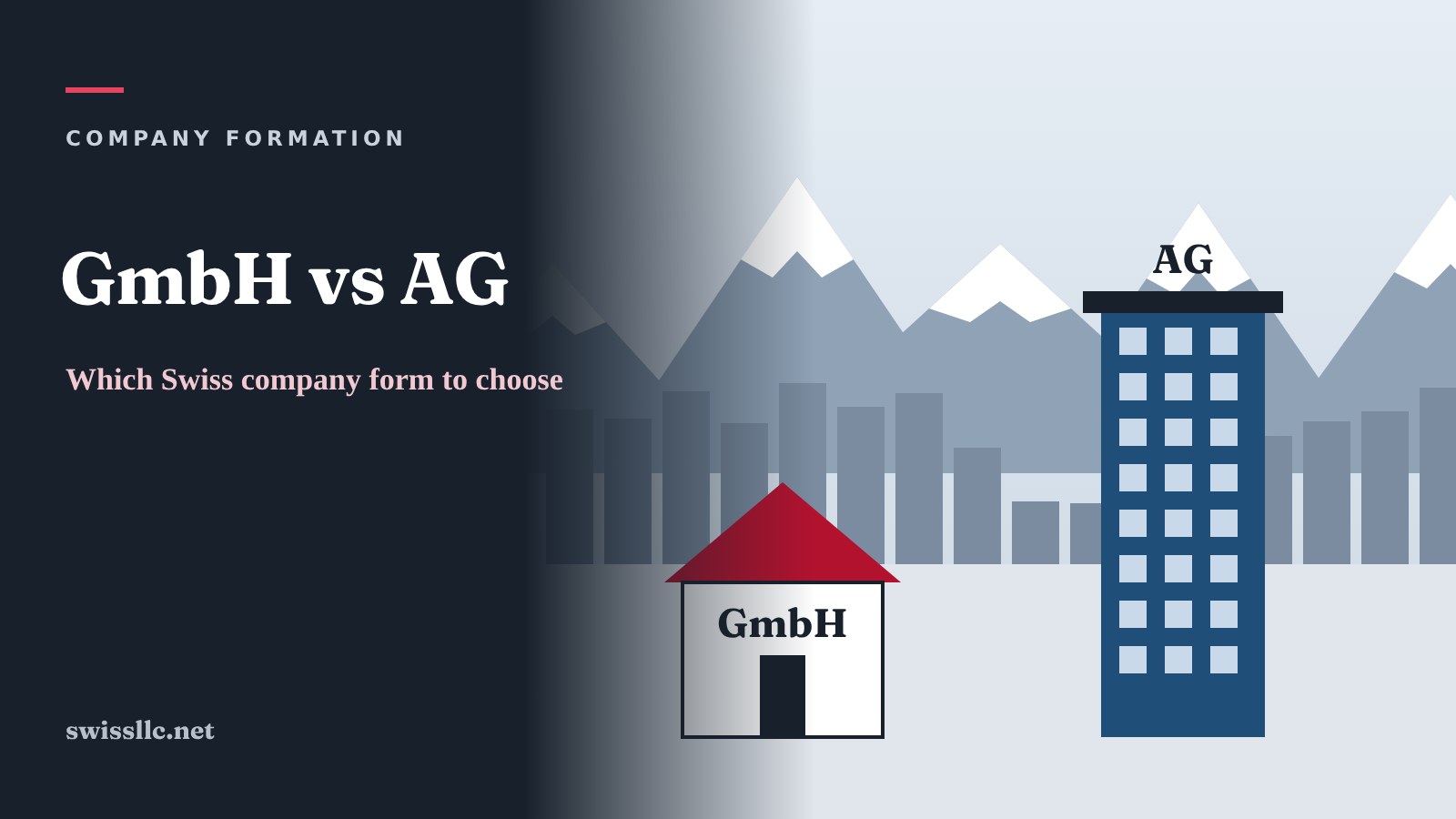
If you are unsure whether a GmbH or an AG suits you better, read our comparison of the GmbH and the AG. If you are working alone with low turnover, a sole proprietorship may be simpler.
Before you start
Gather the basics first:
- Company name. It must include the legal form ("GmbH", "Sàrl" or "Sagl") and be clearly different from names already registered. You can search existing companies in the central business name index, Zefix.
- Registered office. The municipality where the company will be based. This decides which canton's commercial register and tax office you deal with. See our guide to corporate tax for why the canton matters.
- Purpose. A short description of what the company will do.
- Managing directors. At least one person who can represent the company must live in Switzerland. If all founders live abroad, read our guide for foreign founders.
- Audit. Small companies with fewer than ten full-time employees on annual average can waive the audit (an "opting-out") if all shareholders agree.
Step-by-step formation
1. Draft the articles of association
The articles (Statuten) set out the company name, registered office, purpose, share capital and how the company is run. A notary or adviser can prepare them, and many cantons offer templates for simple cases.
2. Pay the share capital into a blocked account
Open a capital deposit account at a Swiss bank and pay in the CHF 20,000 (or more). The bank confirms the deposit in writing; the notary needs this confirmation. Our guide to Swiss business bank accounts explains how this works.
3. Sign the founding deed with a notary
The founders sign a public deed before a notary. It declares the formation, adopts the articles and names the managing directors and, if needed, the auditor. Founders who cannot attend can usually be represented with a notarised power of attorney.
4. Register with the commercial register
The notary or founders file the deed and the application with the cantonal commercial register. The GmbH only comes into existence when it is entered in the register. The entry is then published in the Swiss Official Gazette of Commerce (SOGC).
5. Release the capital
After registration, the bank releases the capital to the company's normal business account, usually on presentation of the commercial register extract.
6. Register for social insurance, VAT and insurance
- Register with an AHV compensation office once the company pays salaries, including to you as managing director. See hiring employees.
- Check whether you must register for VAT: generally from CHF 100,000 annual turnover. Our VAT guide explains the rules.
- Employers must arrange accident insurance (UVG) and occupational pension (BVG) cover for staff.
The government's EasyGov.swiss portal lets you handle several of these registrations online in one place.
How much does it cost?
The KMU portal gives these typical figures for a GmbH:
- Advice and preparation: about CHF 600–2,000
- Notary: about CHF 700–2,000
- Commercial register entry: about CHF 600 for capital up to CHF 200,000
On top of this come bank fees and, of course, the CHF 20,000 capital itself, which stays in the company and can be used for business expenses once it is registered. Notary fees differ widely between cantons.
How long does it take?
With documents ready, many founders complete the process in two to four weeks. Delays usually come from opening the bank account, especially for foreign founders, or from corrections requested by the register.
Why it matters
The GmbH gives small businesses limited liability, a professional image and a clear legal structure for a moderate investment. Taking time over the name, canton, articles and bank account at the start saves trouble later.
Rules and fees change, and cantons differ. Check the official pages linked above and, for important decisions, speak to a Swiss notary or fiduciary.